How to Prepare Scrap Metal for Sale: A Practical Guide for UK Businesses
Preparing scrap metal properly can make the selling process easier.
For businesses, scrap is often generated gradually. A few copper offcuts from one job, aluminium profiles from another and brass fittings from a replacement project may not seem significant individually. Over time, however, these materials can build into a sizeable quantity.
Good scrap management starts with organisation.
By separating materials, keeping useful information and understanding what you have, you can make it easier for a scrap metal buyer to assess your load.
Why Does Scrap Preparation Matter?
A scrap metal buyer needs to understand what material is being offered.
A clearly separated load provides more information than a container containing unidentified mixed metal.
Preparation can help you:
- Identify different metals
- Keep your storage area organised
- Estimate quantities
- Reduce unnecessary mixing
- Take better photographs
- Explain the material clearly
- Make collection or delivery arrangements easier
Good preparation does not mean dismantling every item or spending hours processing the material.
It means making sensible decisions about how the scrap is stored and presented.
Step 1: Identify the Main Metals
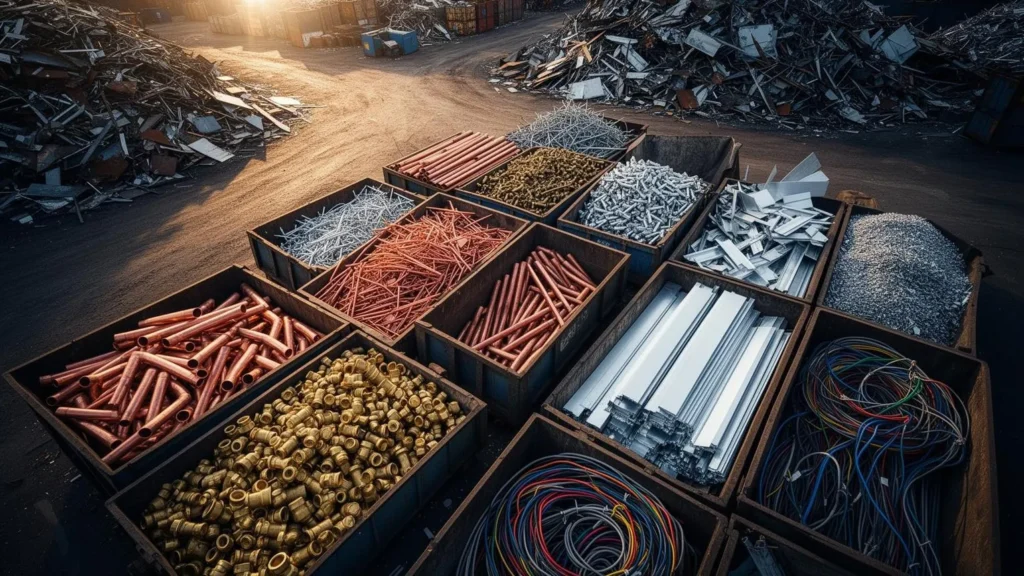
Start by separating the obvious categories.
Common groups include:
Copper
Examples include:
- Copper pipe
- Copper wire
- Copper cable
- Copper tubing
- Copper offcuts
Aluminium
Examples include:
- Aluminium profiles
- Aluminium sheets
- Aluminium sections
- Aluminium wheels
- Aluminium components
Brass
Examples include:
- Brass taps
- Brass valves
- Brass fittings
- Brass components
- Brass offcuts
Steel and Iron
Examples include:
- Structural steel
- Steel offcuts
- Machinery
- Iron components
- General ferrous scrap
If you are unsure about an item, keep it to one side and ask the buyer rather than making an uncertain classification.
Step 2: Keep Non-Ferrous Metals Separate
Copper, aluminium and brass should ideally be separated from general ferrous scrap where practical.
This is particularly useful for businesses that generate significant quantities of non-ferrous material.
For example, an engineering workshop could maintain separate areas for:
- Copper
- Aluminium
- Brass
- Stainless steel
- General steel
This simple system can make it easier to monitor what is accumulating.
Step 3: Remove Obvious Unwanted Materials Where Practical
Some scrap contains other materials.
Examples include:
- Plastic
- Rubber
- Insulation
- Wood
- General waste
- Other metals
Whether these materials should be removed depends on the item.
Do not assume that every attached component needs to be removed manually. Instead, identify what is present and provide accurate information to the buyer.
For example, if you have insulated copper cable, explain that the cable contains insulation rather than describing it simply as clean copper.
Step 4: Keep Similar Materials Together
Even within one metal category, it can be useful to group similar items.
For example, a business with copper scrap could separate:
Copper pipe
from
Copper wire
and
Copper cable
Similarly, aluminium profiles can be kept separate from aluminium wheels or sheet material where practical.
This gives you a clearer understanding of what your stock contains.
Step 5: Estimate the Weight
Weight is an important piece of information when discussing commercial scrap.
If you have access to suitable weighing equipment, record the weight of different materials separately.
If an exact weight is unavailable, provide an honest estimate.
For example:
“Approximately 500 kg of aluminium profiles.”
is more useful than:
“We have some aluminium.”
An estimate does not need to be perfect for an initial enquiry.
Step 6: Take Clear Photographs
Photographs can help a buyer understand your material before arrangements are made.
Take photographs that show:
- The overall quantity
- Close-up examples
- The condition
- Any attached materials
- How the scrap is stored
- The different types of material
Try to use good lighting and avoid photographs where the material is difficult to see.
If you have several different types of scrap, photograph each category separately.
Step 7: Record Where the Scrap Came From
The source of scrap can sometimes provide useful context.
For example:
- Copper from electrical installation
- Copper pipe from plumbing work
- Aluminium profiles from fabrication
- Brass fittings from plumbing replacement
- Steel offcuts from manufacturing
You do not need to provide a complicated history of every item.
A simple description of the source can help explain the material.
Preparing Copper Scrap
Copper is commonly generated through electrical, plumbing, construction and engineering work.
If you have copper scrap, separate obvious copper material from steel, aluminium, brass and general waste where practical.
Common forms include:
- Pipe
- Wire
- Cable
- Tubing
- Components
- Offcuts
For more information, visit our Copper Scrap Buyer UK page.
Preparing Aluminium Scrap
Aluminium can be generated by fabrication, manufacturing, construction, engineering and automotive businesses.
Common forms include:
- Profiles
- Sections
- Sheets
- Wheels
- Tubing
- Components
- Offcuts
Where practical, keep aluminium away from steel and other metals.
For more information, visit our Aluminium Scrap Buyer UK page.
Preparing Brass Scrap
Brass can commonly be found in plumbing, engineering and industrial scrap.
Examples include:
- Taps
- Valves
- Fittings
- Components
- Castings
- Offcuts
Keep brass separate from copper and other metals where practical.
For more information, visit our Brass Scrap Buyer UK page.
Should You Clean Scrap Metal?
“Cleaning” can mean different things depending on the material.
There is a difference between removing obvious general waste and attempting to completely dismantle a complicated component.
For example, removing loose rubbish from a load may make sense, while dismantling every individual fitting may not be practical.
Before spending significant time processing your scrap, ask the buyer what preparation is appropriate for the material.
What If Your Scrap Is Mixed?
Do not assume that mixed scrap has no value.
Commercial and industrial projects can naturally produce mixed loads, particularly during demolition, refurbishment and dismantling work.
If your scrap is mixed, provide:
- Photographs
- Approximate weight
- Description of the materials
- Location
- Information about where the scrap came from
The buyer can then determine what further information is required.
How Storage Can Affect Scrap Management
Poor storage can make scrap harder to manage.
If different metals are repeatedly thrown into the same container, separating them later can take additional time and effort.
A better approach is to establish designated storage areas for common materials.
For example:
Container 1: Copper
Container 2: Aluminium
Container 3: Brass
Container 4: Steel
The exact system will depend on the size and nature of your business.
A Simple Scrap Preparation Checklist
Before contacting a scrap metal buyer, ask yourself:
Have I identified the main metals?
Separate obvious copper, aluminium, brass, steel and other materials.
Have I estimated the quantity?
Record weights where possible.
Is the material mixed?
Make a note of any other metals or materials present.
Have I taken photographs?
Take clear overall and close-up images.
Do I know where the scrap is located?
Provide the collection or delivery location.
Do I know where the scrap came from?
A basic description of the source can be useful.
How Preparation Can Help Your Business
Good scrap management is not only about selling metal.
It can also improve how your business uses its workspace.
Organised scrap storage can:
- Reduce clutter
- Free storage areas
- Make materials easier to locate
- Reduce unnecessary mixing
- Make stock easier to monitor
- Simplify future scrap sales
For businesses that generate scrap regularly, these small improvements can become part of normal operational processes.
When Should You Contact a Scrap Metal Buyer?
You do not necessarily need to wait until your storage area is completely full.
If your business regularly generates a particular type of scrap, it can be useful to understand the buying process early.
This allows you to establish how to store the material and what information to collect.
For larger quantities, you can provide the buyer with an overview of the material before making collection or delivery arrangements.
You can learn more about the overall service on our Scrap Metal Buyer UK page.
Final Thoughts
Preparing scrap metal does not need to be complicated.
The key is to know what you have, keep different materials separated where practical, estimate quantities and provide clear information.
Copper, aluminium and brass can all appear in many different forms, so the type, grade, condition and cleanliness of the material can matter.
If your business regularly generates scrap, a simple separation and storage system can make the entire process easier.
When you are ready to discuss your material, contact a professional scrap metal buyer with your details and photographs.
Request a Scrap Metal Quote
If you have scrap metal ready to sell, get in touch with your details and photographs to discuss your material.